Blog sur l'automatisation
Les trois piliers d'un déploiement de cobots réussi : sécurité, qualité et flexibilité d'une source unique
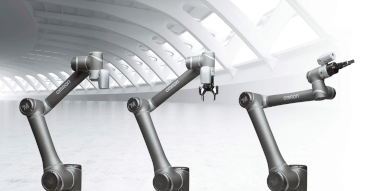
4 novembre 2019 Les cobots, ou robots collaboratifs, sont un sujet brûlant dans l'environnement industriel. Pour rester compétitives, les entreprises doivent donc développer des concepts robotiques novateurs. Des concepts qui offrent des chaînes de production flexibles dans lesquelles les dispositions de fabrication peuvent être facilement adaptées à l'évolution des besoins des clients. Pour atteindre cet objectif de fabrication flexible, Omron recommande d'associer des robots et des cobots mobiles. Omron conseille également d'ajouter des applications logicielles intégrées et des technologies de vision, et de garantir l'assistance et l'évaluation des risques.
Smart machines: laying the golden egg?
16 octobre 2019 Greater manufacturing efficiency: it’s the golden egg we’re all looking for. But it’s getting increasingly hard to find. The solution could be smarter automation, which involves lots and lots of data (‘big data’) and data collection and data-driven modelling. The smart machine then uses the models to automatically adjust its own behaviour (i.e. machine learning).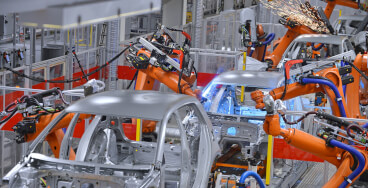
Legacy of machine vision
16 octobre 2019 Did you know that for more than 40 years, Omron has developed vision sensing technologies for factory automation, surveillance and transport systems, and more recently for facial recognition and image processing for mobile phones, and even driver monitoring for autonomous driving?
Improve OEE with Artificial Intelligence at the Edge in Food Manufacturing
16 octobre 2019 Implementation of Artificial Intelligence (AI) in food manufacturing is picking up speed. Many F&B companies are realizing that AI presents an opportunity to increase not only the Overall Equipment Effectiveness (OEE) – and therefore combine reduced costs with increased productivity – but also to improve the analysis of data to support continuous improvement programs such as reducing waste or process operations variability.
Late-stage customization in pharmaceutical manufacturing
16 octobre 2019 As a result of serialization legislation, pharmaceutical manufacturers must now ensure that labels printed at a late stage contain all of the data required for compliance. This includes customizing product labels for certain markets, customers or products by adding variable data to labels or packaging. This avoids the need to stock individual packaging materials for each variant.
Top tips for choosing a mobile robot
16 octobre 2019 In an age of short product lifecycles and an increasing demand for customised solutions, if you’re a manufacturer, you need to be very agile to remain competitive. For instance, you might need to make products down to a lot size of one as simply and cost-efficiently as in mass production; or to change or update your production line at short notice. One key solution is a greater co-operation between people and machinery, leading to improved efficiency and more flexibility in the design of the production line.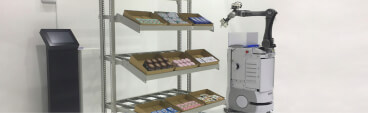
Autonomous bin picking with a collaborative mobile robot
16 octobre 2019 Our TM collaborative robot provides a unique solution to easily automate applications such as picking and packing that, traditionally performed by humans, have been challenging to automate. As part of the TM series launch, we also released a mobile-compatible model, which seamlessly integrates into Omron’s LD series autonomous mobile robot. Combined with a 3D vision camera mounted directly onto the collaborative robot, this enables for example e-commerce companies to automate more complex tasks. This includes pick and place of various items onto a tray or container, as well as connecting production processes with the autonomous mobile robots for flexible manufacturing and materials handling.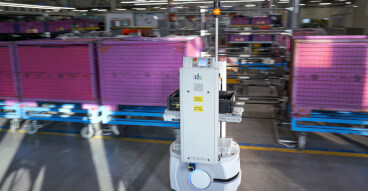
Agile et intelligent : La robotique mobile sur mesure
10 octobre 2019 Un grand groupe automobile allemand réalise des gains d'efficacité et innove pour devenir un leader de la manutention grâce aux robots mobiles LD d'Omron et à un accessoire de convoyeur de cts GmbH.La production automobile et la production en chaîne d'assemblage ont toujours été étroitement liées. L'installation par Henry Ford en 1913 de tapis transporteurs dans ses usines marque la naissance de la voiture en tant que produit de masse. Aujourd'hui, une journée de travail sans chaîne de montage est inconcevable dans les usines BMW. Ce groupe s'appuie sur des moyens de transport et de logistique innovants pour améliorer l'efficacité et la flexibilité, mieux relier les processus de travail et libérer les employés des tâches répétitives et chronophages. C'est ici qu'interviennent les robots mobiles LD d'Omron qui offrent un retour sur investissement particulièrement élevé pour le transport de matériaux. Ces robots mobiles autonomes sont équipés d'une tour de convoyeur ; un dispositif de manutention de charge réglable en hauteur, développé par l'intégrateur de systèmes cts GmbH. L'interaction entre les employés et les robots de transport chez BMW illustre de manière éclatante l'harmonie qui peut régner dans l'usine du futur.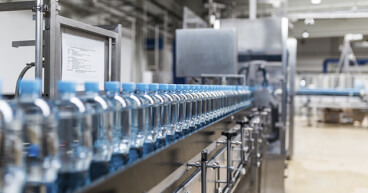
How to secure FMCG supply chains with traceability?
2 octobre 2019 The traceability of food and drink products throughout the production and distribution process can be a complex issue. For example, alcoholic drink producers need systems that enable them to comply with local regulations regarding food traceability, as well as tax legislation.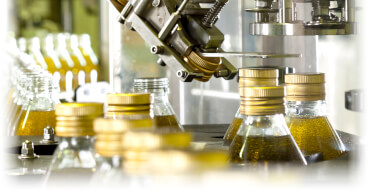
Barcodes: keeping track of product quality
2 octobre 2019 For many years, barcode technology has proved to be an economical and flexible identification technology. It has continued to develop and as a result, 1D and 2D codes (such as Datamatrix) are now used almost universally. Their versatility have made them a popular choice for streamlining many key supply chain processes, including production, logistics and item traceability.
3 Steps to Optimize Operational Efficiency for the Future of Manufacturing
2 octobre 2019 Operational Excellence is required to maximize capital expenditures. But at the same time manufacturers are challenged to move away from traditional high volume, low mix production runs, to more complex high mix, low volume production with consumer demand linked directly with production. How to optimize operational efficiency to be ready for the future of manufacturing?